“The Thirteen” is another name for Jiangsu’s thirteen prefecture-level cities. I want to visit them one stop at a time, and I picked Suzhou first.
Food first
The first thing I did in Suzhou was not look at gardens. It was find something to eat. The table filled up quickly: skewers still smoking on the grill, four freshly steamed shengjian buns, a bowl of red bean soup with little rice balls, and a fish under sweet-and-sour sauce.
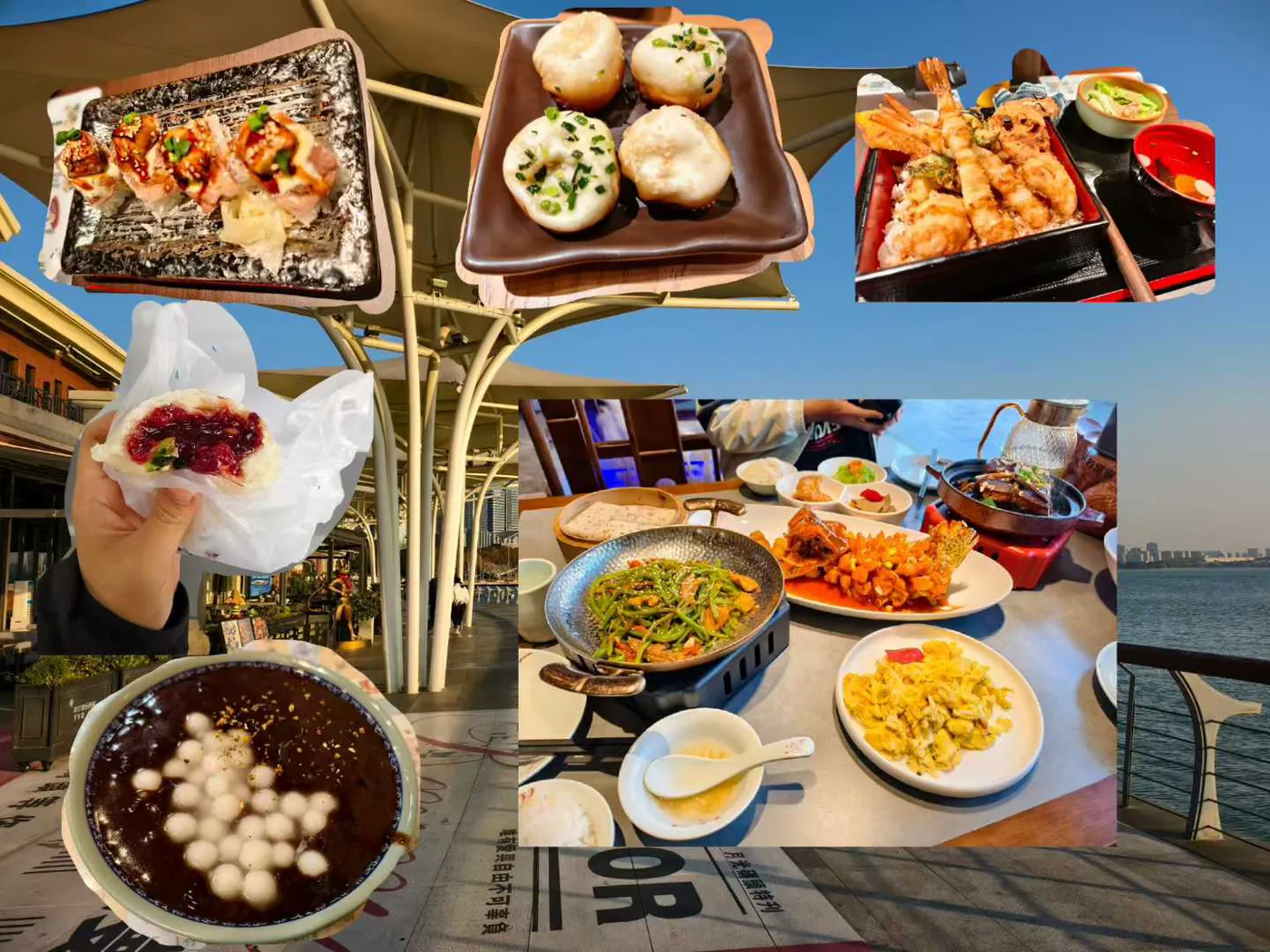
The red bean soup was the surprise. The sweetness was blunt and unapologetic, the mashed beans and the chewy rice balls mixed into something warm enough to fix a whole afternoon. Jiangnan does not hide its sugar. It just serves it.
The lanes
After lunch I walked the lanes. White walls, dark tiles, wooden lattice windows. Two huge characters for “Gusu” painted on the wall, a row of little houses underneath, bougainvillea spilling over the eaves in a very loud orange.
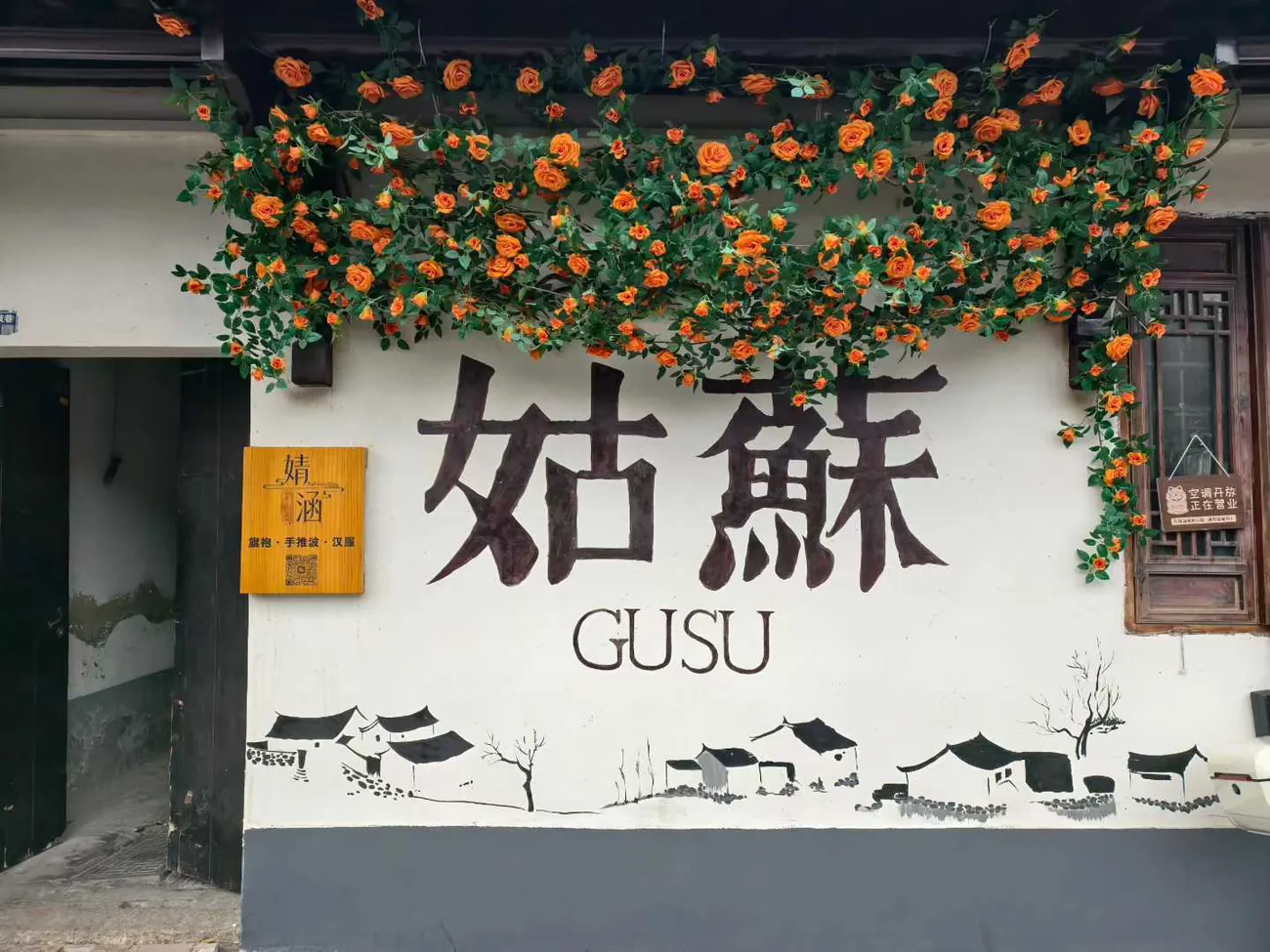
Suzhou does not need a filter. It simply keeps “old” in good condition and lets people live inside it as usual.
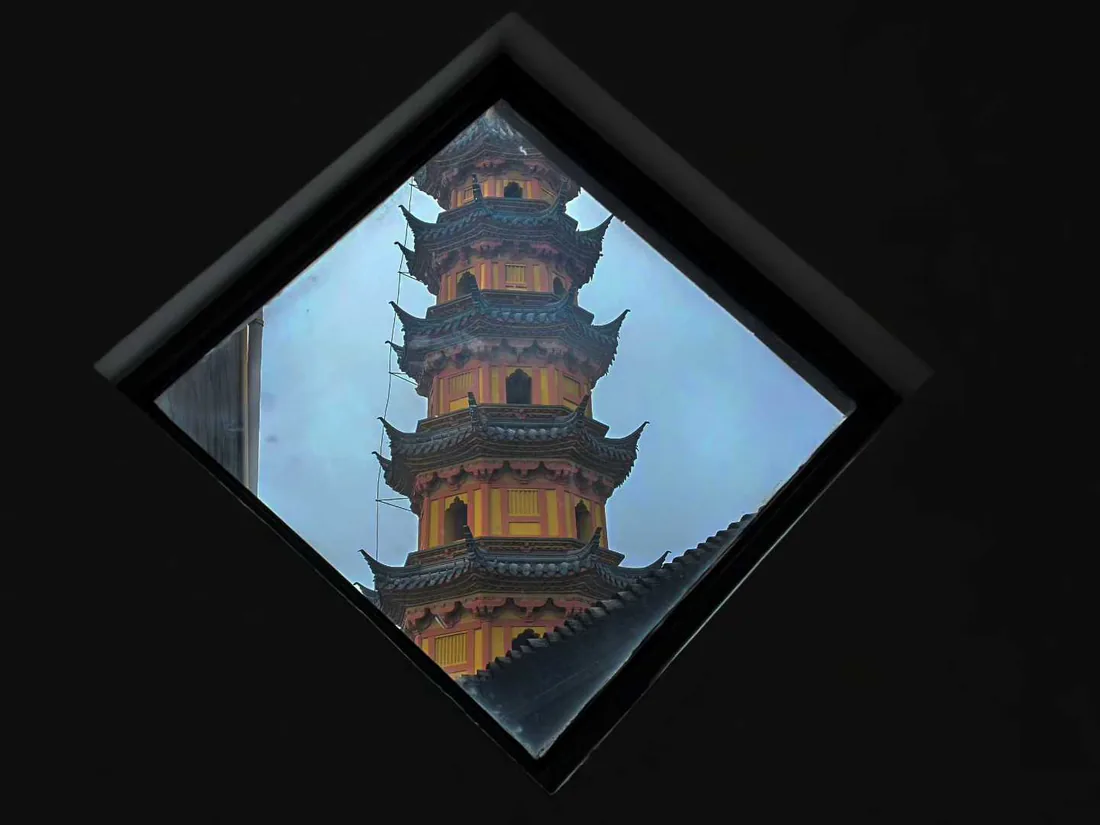
A pagoda in a diamond window
Cutting through a courtyard, I looked up and found a diamond-shaped window with a pagoda inside it, perfectly framed. Orange-red and ochre, the eaves stepping inward floor by floor, the sky a flat grey-blue.
Bookshop, then dusk
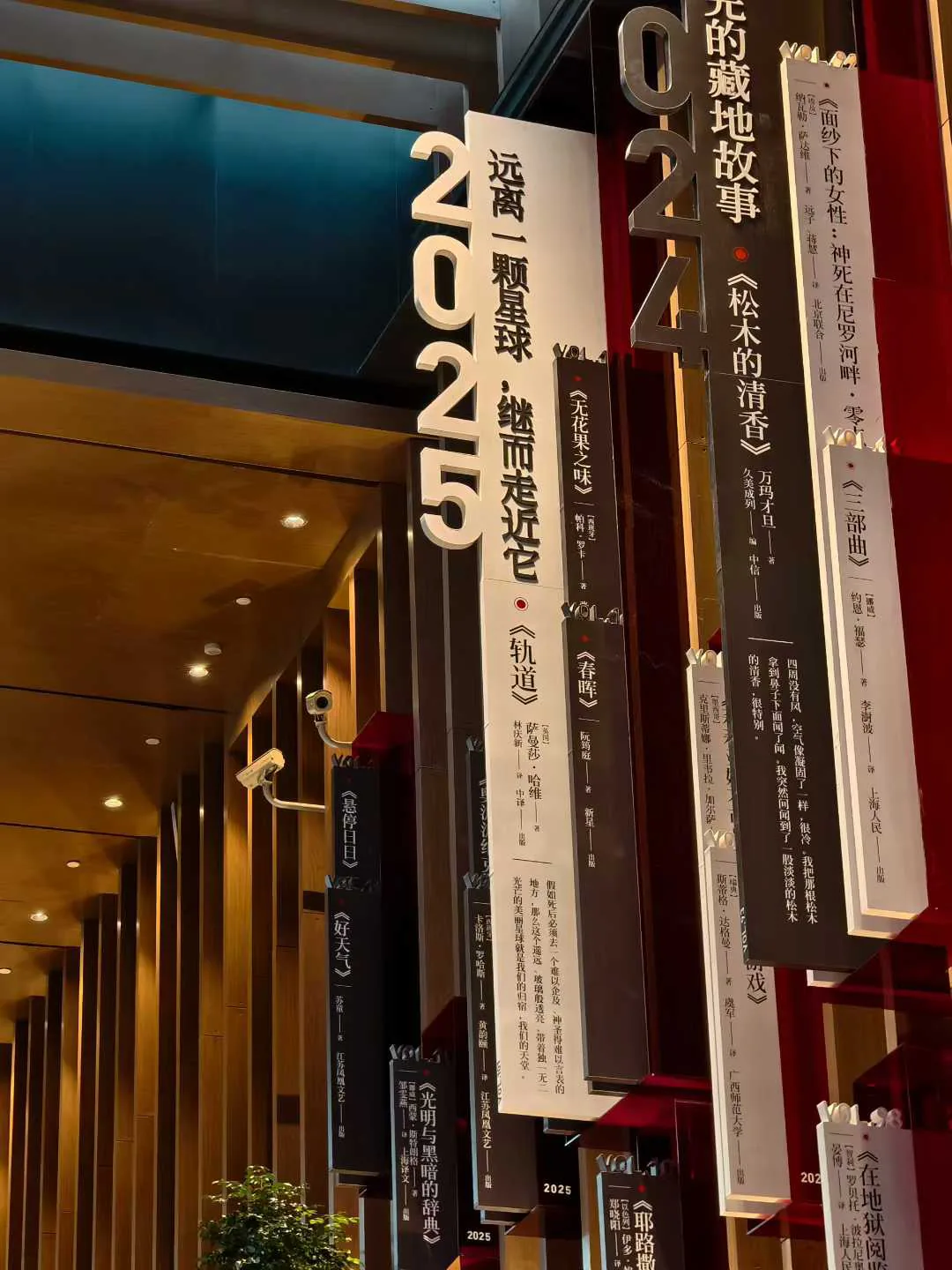
In the afternoon I hid in a bookshop. Spines hung in the air like sheets of paper drying on a line, the year blown up into giant numerals beside them. I picked one book and stayed until it got dark.
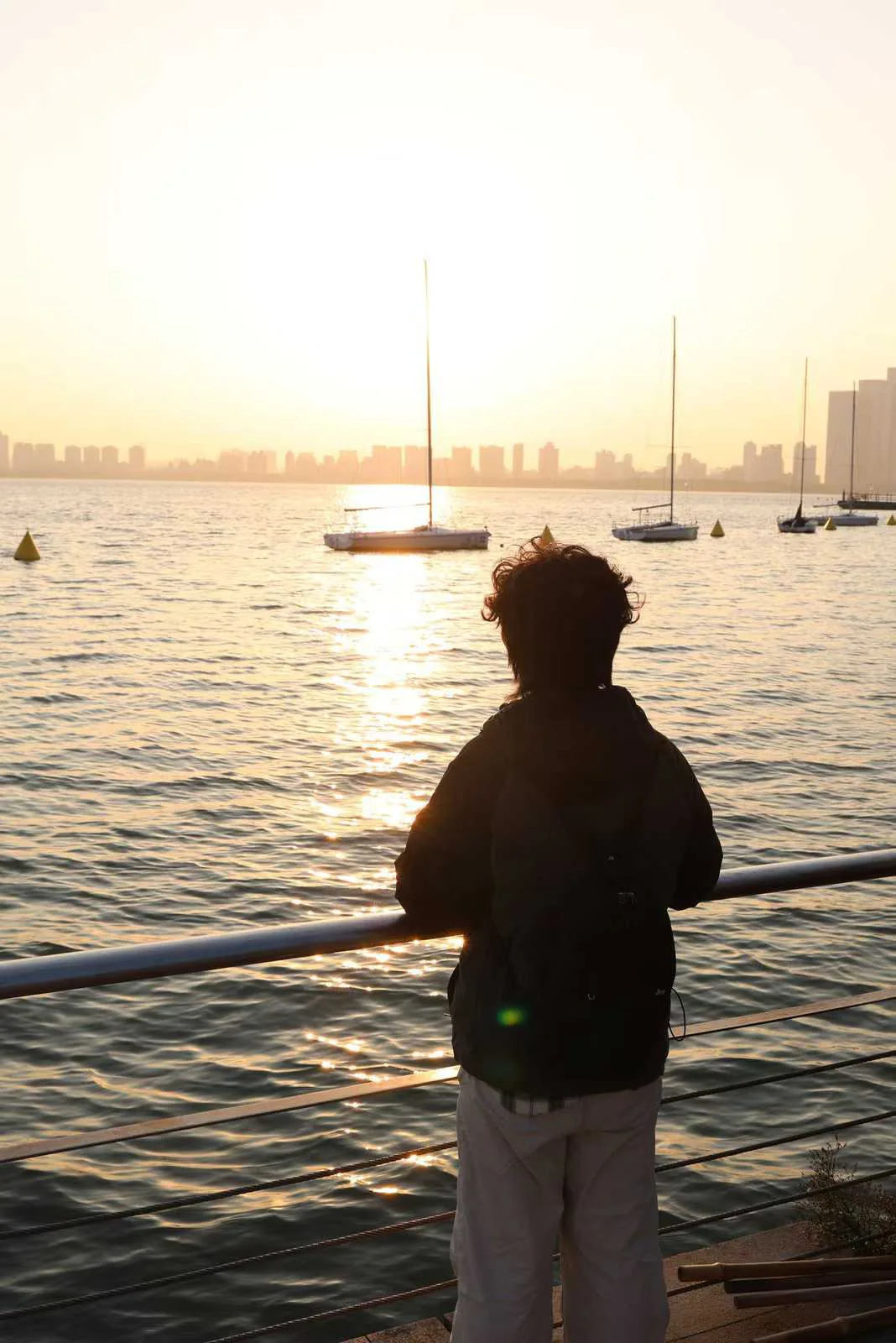
At dusk I walked down to the water. The sun dropped behind the towers on the far bank, sailboat masts stood upright in the light, and the surface flattened into a single gold line.
Suzhou was a slow day. Slow enough that all I remember leaving with is three things: sweetness, white walls, and a pagoda seen through a window.
Life needs less overthinking. Do more. Feel more.